
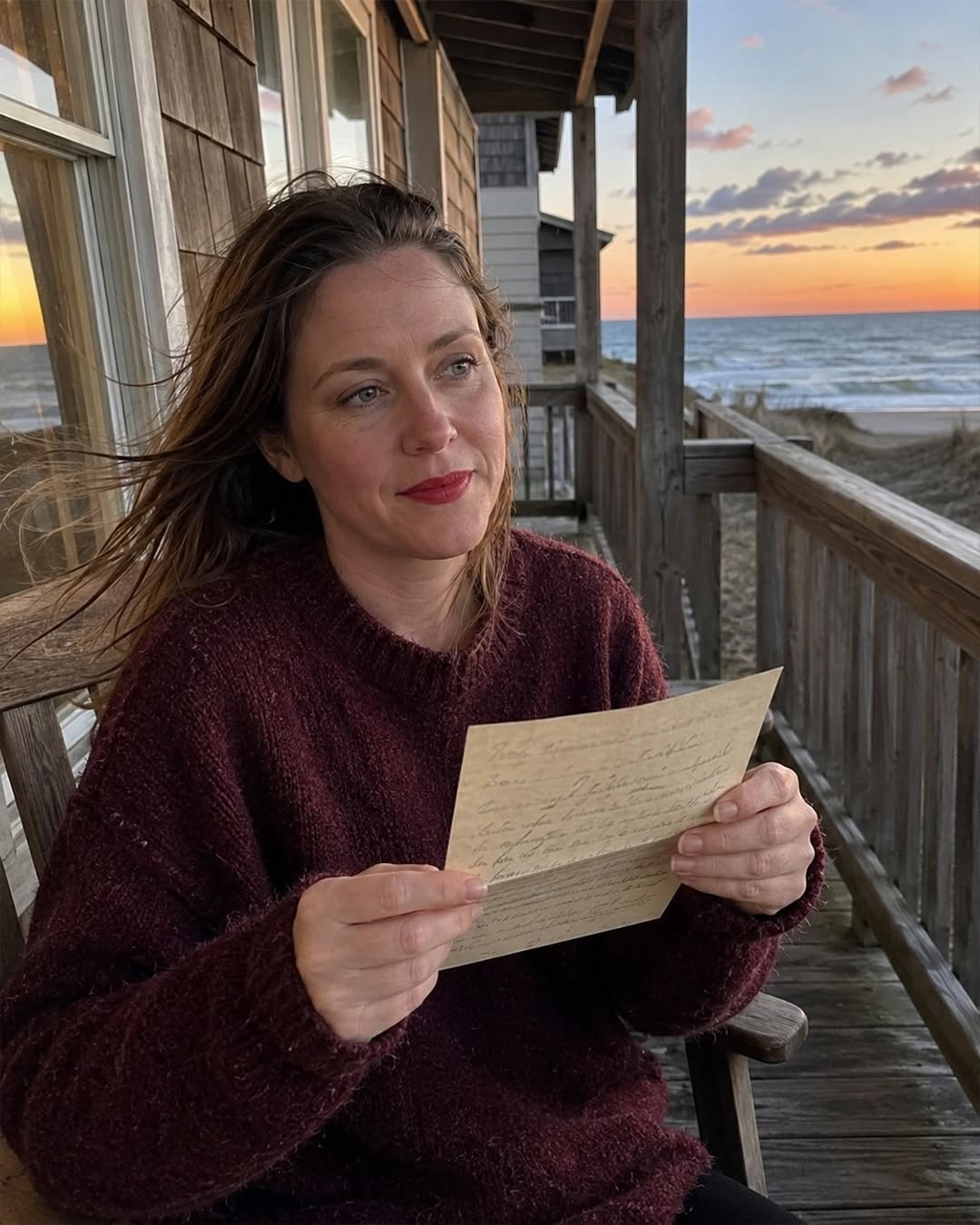
After everyone had gone to bed, I slipped out onto the porch. The December air was cold and sharp, carrying the salt smell of the ocean. Stars scattered across the sky like spilled sugar. Somewhere in the distance, a foghorn sounded.
I sat in Grandma’s old rocking chair—my chair now—and let myself think about the past year, about 15 years before that, about the woman I used to be and the woman I’d become.
I used to think forgiveness meant pretending nothing happened. That being the bigger person meant swallowing your pain and smiling through it. I don’t believe that anymore.
Some things can’t be forgiven. Not because you’re bitter, but because forgiveness requires acknowledgement, requires remorse, requires change. And some people will never offer those things.
My mother had called three more times since I’d blocked her. Each time from a different number, each time with a different approach—anger, guilt, bargaining. Never once with an apology.
I didn’t hate her. That surprised me; I thought I would after everything. But hate takes energy. It takes space in your head and your heart, and I’d already given her enough of both.
What I felt now was something smaller, quieter—something like pity mixed with acceptance. She was who she was. She’d made her choices, and now I was making mine.
Boundaries aren’t about punishment. They’re about protection, about choosing where your energy goes. I’d spent 32 years trying to earn a seat at a table that didn’t want me. Now I had my own table. It was smaller, quieter, but everyone there had chosen to be there. No obligations. No resentments. No ghosts.
I rocked slowly in the chair, listening to the waves. For the first time in my life, I wasn’t waiting for anything. I was just here.
On Christmas morning, I found it. I was cleaning up from the night before, putting dishes away, when I noticed something behind Grandma’s photo on the mantelpiece. An envelope, cream-colored, tucked into the back of the frame.
My name was written on the front in her handwriting. Below it, a note: To be read on your first Christmas as owner. My hands trembled as I opened it.
My dearest Yolena, if you’re reading this, it means you did it. You stopped being invisible.
I wish I could be there to see it. I spent years watching your mother try to erase you, and it broke my heart. I should have said something. I should have fought harder. But Diane is my daughter, and I kept hoping, foolishly, that she would change. She didn’t, and I’m sorry for that.
I left you this house because you earned it. Not through manipulation or scheming, like they’ll probably say, but through love. Pure, simple love that never asked for anything in return.
You have your father’s eyes, Yolena. Did I ever tell you that? David was a good man. Impractical, yes. A dreamer, certainly. But good. Your mother never could see that. She only saw what she’d lost by loving him.
You inherited his eyes and his heart and his ability to see beauty in things other people overlook.
Living well is the best revenge, they say. But living true, that’s even better. Be true, Yolena. Be who you are. Don’t let anyone make you small again.
I love you. I’m proud of you. And wherever I am, I’m watching.
Your Grandma.
I pressed the letter to my chest and closed my eyes. “Thank you,” I whispered to the empty room. The fire crackled, the waves rolled, and somewhere, I knew she heard me.
Before I end, I want to share some thoughts on what happened—not to excuse anyone, but to understand. My mother isn’t a monster. That would be easier, honestly, if I could just label her as evil and move on. But people are more complicated than that.
Here’s what I’ve come to believe: Diane married my father at 19. She was young, idealistic, and convinced that love would conquer all. When reality hit—the poverty, the instability, the death—she couldn’t process the grief. So, she converted it into shame.
In her mind, loving David became her biggest mistake, and I became living proof of that mistake. Every time she looked at my eyes, she saw not her daughter, but her failure.
That doesn’t excuse what she did. Nothing excuses 15 years of systematic exclusion, gaslighting, and emotional abandonment. But it explains it. And understanding helped me let go of the question that had haunted me for decades: What did I do wrong?
The answer is nothing. I did nothing wrong. I was just unlucky enough to be born with the wrong man’s eyes.
As for me, my weakness was patience. Kindness without boundaries. I spent 15 years thinking that if I was just quiet enough, good enough, and undemanding enough, they would finally see me. They never did.
Because here’s the truth: Some people don’t want to see you. And no amount of shrinking yourself will change their vision.
The lesson? Don’t water dead plants. Don’t knock on doors that won’t open. Don’t beg for a seat at tables where you’re not wanted.
Build your own table instead. And that’s what I’m doing now. One day at a time.
Disclaimer: This story is a work of fiction created for entertainment purposes. Any resemblance to real persons, events, or places is coincidental.
To see the full cooking instructions, go to the next page or click the Open button (>) and don't forget to SHARE it with your friends on Facebook.