
I closed my eyes. “Being a mother requires more than biology, Mom. You taught me that.”
“What is that supposed to mean?”
“It means you spent 30 years trying to erase a dead man, and you erased me instead. And now it’s done. I’m done.”
“Yolena.”
“Goodbye, Mom.”
I hung up. Then I blocked her number. It was the first time in my life I’d ended a conversation with my mother on my own terms. The first time I’d stopped waiting for an apology that was never going to come. It felt like putting down something heavy I hadn’t realized I was carrying.
In February, I made a decision. I talked to my company about working remotely. They agreed, partially because I was good at my job, and partially because post-pandemic flexibility had become the norm.
I packed up my Raleigh apartment, loaded my car, and drove back to Outer Banks. The beach house was waiting for me.
I spent the first week settling in, moving furniture, painting the bedroom a soft gray-blue, making the space mine instead of a museum of family memories I’d never been part of.
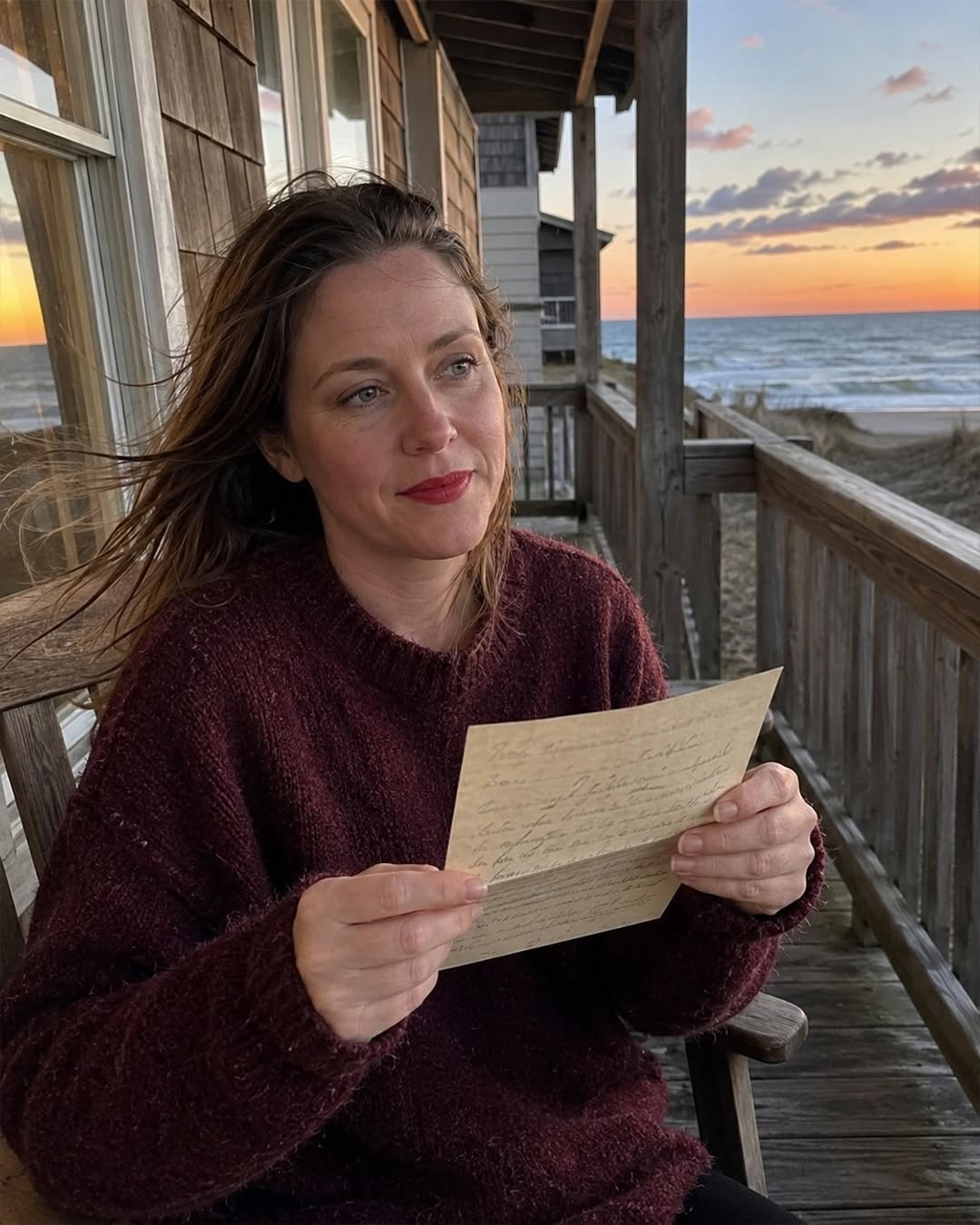
One afternoon, while cleaning out a closet in Grandma’s old office, I found a box I hadn’t seen before. Inside were letters, dozens of them written to various family members, but never sent. Most were mundane—thank-you notes, birthday wishes, complaints about the weather.
But at the bottom, I found an envelope with my name on it: For Yolena, when she’s ready. Inside was a single page.
My dearest granddaughter, you don’t need their approval to have value. You only need the approval of yourself.
They tried to make you small, but small things don’t cast shadows. You were never small, Yolena. You were just waiting for your moment.
I hope I’m not there to see it. Not because I don’t want to be, but because I know you need to do this alone. You need to prove to yourself that you can.
When it’s over, remember: living well isn’t revenge. It’s simply the truth.
I love you. I always have.
Grandma Vivien.
I held the letter for a long time. That weekend, Aunt Patty came to visit. We cooked dinner together, something neither of us had done with family in years. It was quiet, simple, and for the first time in my life, it felt like home.
Meredith showed up unannounced in mid-March. I was on the porch reading when her white Range Rover pulled into the driveway. I watched her sit in the car for a full minute before she opened the door.
She walked toward me slowly, like she was approaching a wild animal. “I’m not here to fight,” she said.
I set my book down. “Then why are you here?”
She stopped at the bottom of the porch steps. She looked different—tired, uncertain, none of the polished confidence I remembered.
“Can we talk?”
I gestured to the empty chair beside me. She climbed the steps and sat, her movements stiff and awkward. For a long moment, neither of us spoke.
“I didn’t know,” she finally said. “About how Mom treated you. I mean, I knew she favored me. That was obvious. But I didn’t know she was actively keeping you away.”
“Would it have mattered if you knew?”
Meredith flinched, then quietly: “I don’t know. That’s the honest answer.”
I studied my sister—half-sister, technically. The golden child, the one who’d never had to fight for a place at the table.
“You never questioned it,” I said. “Why? I was never there. You just accepted it.”
“I did.” She looked at her hands. “I believed what I was told. That you didn’t want to be around us. That you preferred being alone.”
“Did that make sense to you? That your sister would choose to be alone every Christmas for 15 years?”
She didn’t answer. We both knew she’d never thought about it that deeply.
“I’m not ready to have a relationship with you,” she said finally. “But I wanted you to know I’m starting to see things differently.”
“That’s more than I expected.” I nodded slowly. “Thank you for telling me in person.”
She left 30 minutes later. It wasn’t reconciliation, but it was something.
Over the next few months, I learned something important about boundaries: They’re not walls. They’re doors with locks. And you decide who gets a key.
With my mother, complete no contact. No calls, no texts, no explanations. I didn’t owe her closure. She’d had 15 years to ask questions, and she’d chosen silence. Now, I chose the same.
With Richard, a single email once a month. Updates on the house, polite but distant. He’d been a passive bystander for 27 years. I wasn’t going to pretend that observation was the same as love.
With Meredith, the door was open, but just barely. She texted sometimes—photos of her daughter, random observations about the weather. I responded when I felt like it. No pressure, no expectations.
With the rest of the family, it varied. The ones who’d reached out to apologize got responses. The ones who’d defended my mother got silence. I wasn’t keeping score, but I was paying attention.
And Aunt Patty? Patty got the spare key.
“You sure about this?” she asked, holding the metal in her palm like it might explode.
“You’re the only one who asked about me,” I said. “For 15 years, you were the only one who noticed I was missing.”
“I should have done more than notice.”
“You’re doing more now. That’s what matters.”
She visited every other weekend. We walked on the beach. We talked about Grandma Vivien. We built something new on the ashes of something broken.
I didn’t slam the door on my family. I just stopped holding it open for people who never planned to walk through.
There’s a difference between isolation and boundaries. Isolation is loneliness. Boundaries are peace. I was finally learning to tell the difference.
This year, I hosted Christmas. Not for 23 people, not for people who’d spent 15 years pretending I didn’t exist. For four.
Aunt Patty arrived first, carrying a casserole dish and a bottle of wine. “Vivien’s recipe,” she said, handing me the dish. “I found it in her old cookbook.”
My two closest friends from Raleigh came next, Beth and Carmen—the women who’d been my real family when my actual family had forgotten me. They’d driven three hours to be here.
And finally, Marcus, a colleague from my firm who’d gone through a divorce last year and had nowhere else to go. When I’d invited him, he’d stared at me like I’d offered him a kidney. “You barely know me,” he’d said.
“I know what it’s like to be alone on Christmas,” I’d replied. “Nobody should feel like that if they don’t want to.”
So, here we were. Four people around a table meant for 12. A fire crackling, candles lit, and the smell of Grandma Vivien’s recipe filling the air.
On the mantelpiece, I’d placed her photo—the one of us laughing together, the only picture in this house that had ever included me.
Aunt Patty raised her glass. “To Vivien, and to the granddaughter who reminded us what family actually means.”
We clinked glasses. Outside, the waves crashed against the shore. Inside, the conversation flowed easily. No walking on eggshells. No watching what I said. No feeling like an intruder in my own life.
I looked around the table at the faces of people who had chosen to be here, who wanted me there. “Thank you,” I said quietly. “For coming.”
Beth squeezed my hand. “Thank you for inviting us. This place is beautiful.”
It was. And for the first time, I felt like I belonged in it.
SEE NEXT PAGE >>>
To see the full cooking instructions, go to the next page or click the Open button (>) and don't forget to SHARE it with your friends on Facebook.