
I don’t remember him, not really. Just fragments. The smell of turpentine. A deep voice humming jazz. The way he used to lift me onto his shoulders so I could touch the clouds.
He was a painter, a dreamer, a man who believed in beauty more than bills. My mother married him when she was 19. She was young, impulsive, and madly in love.
Her parents disapproved. Her friends warned her, but Diane followed her heart. And then reality set in.
David couldn’t hold a steady job. His paintings didn’t sell. They lived in a one-bedroom apartment with a leaky roof and a baby who cried all night.
When I was three, David was driving home from a gallery showing—his first real chance at success. A truck ran a red light. He died on impact.
The paintings that didn’t sell while he was alive are worth six figures now. But my mother didn’t want the money. She wanted to forget.
She remarried two years later to Richard Mitchell—stable, successful, safe. They had Meredith when I was seven. And slowly, carefully, my mother began erasing David Carter from existence.
She never talked about him, never showed me photos. When relatives asked about her first marriage, she changed the subject.
And me? I have his eyes. Blue-gray, unusual, unmistakable.
Grandma Vivien was the only one who told me the truth. “Your mother doesn’t hate you, Yolena,” she said once when I was crying on her porch after another Christmas alone. “She hates what you remind her of.”
I didn’t understand then. But the day I walked into Harold Finch’s office, I finally did.
Harold Finch’s office was in a brick building downtown, the kind of place that smelled like old books and important decisions. He was older than I expected, silver-haired, kind, with a handshake that felt like a promise.
“Thank you for coming, Miss Carter,” he gestured to a leather chair. “Please sit.”
I sat. My hands were shaking. He slid an envelope across his desk.
“Your grandmother asked me to give you this first, before we discuss the legal matters.”
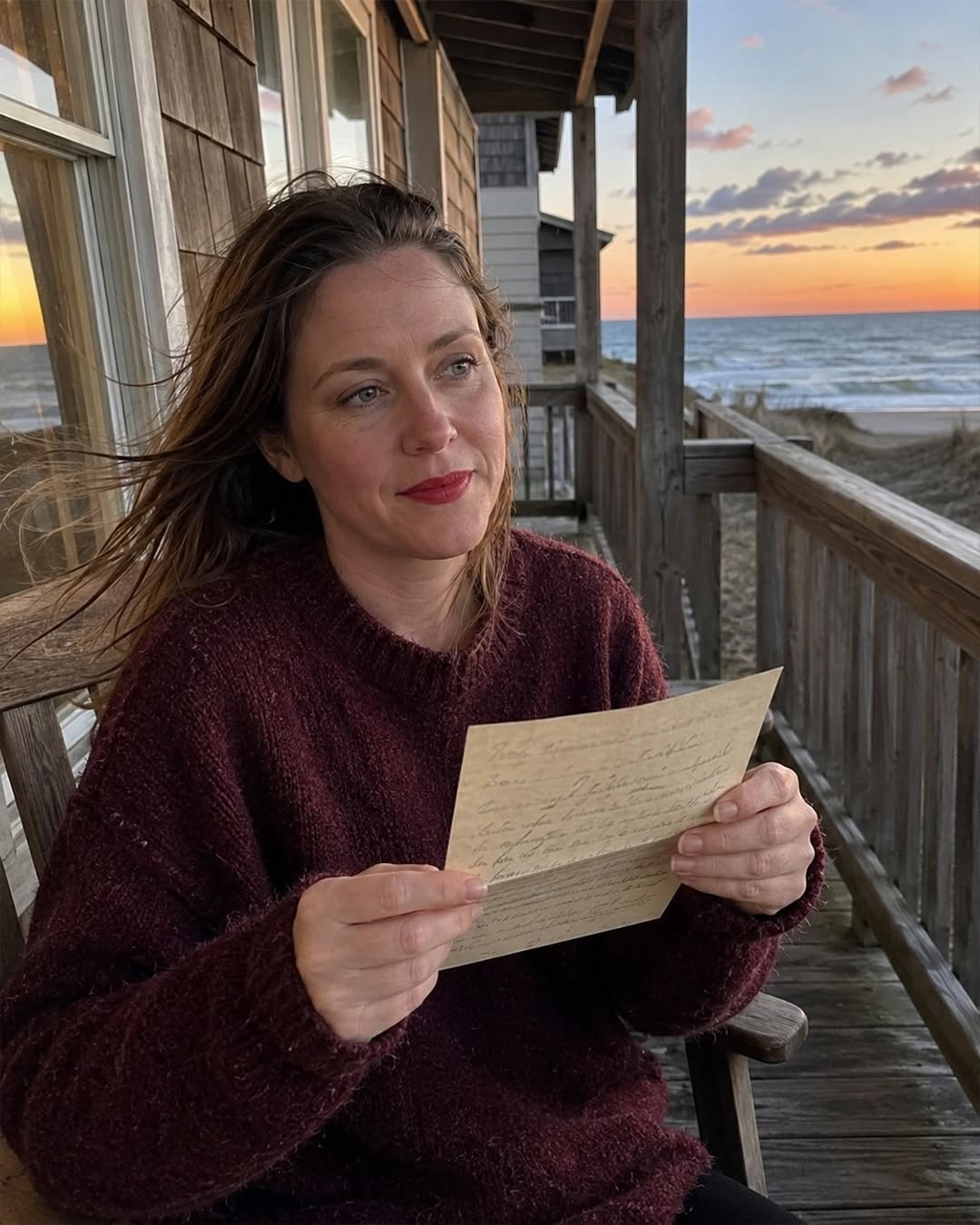
The envelope was cream-colored, my name written in Grandma Vivien’s shaky cursive. I opened it carefully, like it might break. Inside was a single page, handwritten.
My dearest Yolena, if you’re reading this, I’m gone. But before I left, I needed to make something right.
You are the only one who never asked me for anything. You visited every Sunday, not for my money, not for the house, but for me. You called just to hear my voice. You sat with me when I was sick, when I was scared, when I was lonely.
Your mother and sister came when they wanted something. You came because you loved me.
So, I’m leaving you everything. They will say I was confused. They will say you manipulated me. But I have never been clearer about anything in my life.
The beach house is yours. All of it. Do with it what you will. Just promise me one thing: Stop being invisible.
With all my love, Grandma.
I looked up at Harold. My eyes were wet. “The beach house?” I whispered. “She left me the beach house?”
Harold nodded. “The deed, the property, everything. She prepared this five years ago and updated it twice specifically to protect against contestation. Miss Carter, your grandmother anticipated resistance. This will is ironclad.”
I sat in that leather chair for a long time, holding Grandma’s letter like it was the only thing keeping me tethered to the earth.
The beach house. The place where my family gathered every Christmas without me. The place where they took photos in matching sweaters and pretended I didn’t exist. The place worth $2.3 million that my mother had been eyeing for decades.
And Grandma Vivien had left it to me.
Harold cleared his throat. “Miss Carter, I need to ask, do you want me to notify your family about the will?”
I looked at him. Fifteen years. Fifteen Christmases. Fifteen times I’d found out I was excluded through a screen, sitting alone in my apartment, wondering what I’d done wrong. And now, for the first time in my life, I had something they wanted.
“No,” I said. “Not yet.”
Harold nodded slowly. He didn’t seem surprised. “Your grandmother predicted you’d say that.”
“She did?”
He reached into his desk and pulled out another envelope, smaller, sealed with wax. “She left me instructions. She said, ‘When Yolena tells you she wants to wait, give her this.’”
I opened it. Inside was a single line in Grandma’s handwriting.
I knew you’d need time. Take all the time you need. But when you’re ready, show them who you are.
I folded the note and put it in my pocket. “Mr. Finch, how long does it take to transfer the deed?”
“With your cooperation, about three weeks.”
“And if I want to keep it private?”
He smiled just a little. “I’ve been doing this for 40 years, Miss Carter. I know how to be discreet.”
I stood up. “Then let’s begin.”
Eleven months. That’s how long I waited. And in that time, I learned what my grandmother already knew: Patience isn’t weakness. It’s strategy.
The next 11 months felt like living two lives.
In one life, I was Yolena Carter, senior accountant at a private firm in Raleigh. I filed reports. I attended meetings. I ate lunch alone at my desk.
In the other life, I was quietly becoming the owner of a $2.3 million beach house that my family didn’t know belonged to me.
In February, I signed the final paperwork. Harold handed me a set of keys and a folder thick with documents. “It’s done,” he said. “The property is legally yours.”
April, Easter came and went. No invitation. I didn’t expect one.
July, Meredith’s birthday. I opened Instagram and saw 47 photos from the beach house. My mother raising a champagne glass. My sister blowing out candles on the deck. My cousin’s kids running through the living room I now owned. I saved every photo. “Documentation,” Harold had called it. Evidence of use without permission.
September. I was checking my email when I found a forwarded message from Aunt Patty, my grandmother’s younger sister. It was from a family group chat I’d never been added to.
Diane had written, “Mom’s beach house needs maintenance. I’m scheduling a contractor for next month. I’ll handle the bill.”
She was scheduling repairs on my house. Spending money on my property without asking, without knowing.
I called Harold. “What do I do?”
“Letter,” he said. “Keep the receipts. She’s improving your asset for free.”
SEE NEXT PAGE >>>
To see the full cooking instructions, go to the next page or click the Open button (>) and don't forget to SHARE it with your friends on Facebook.